
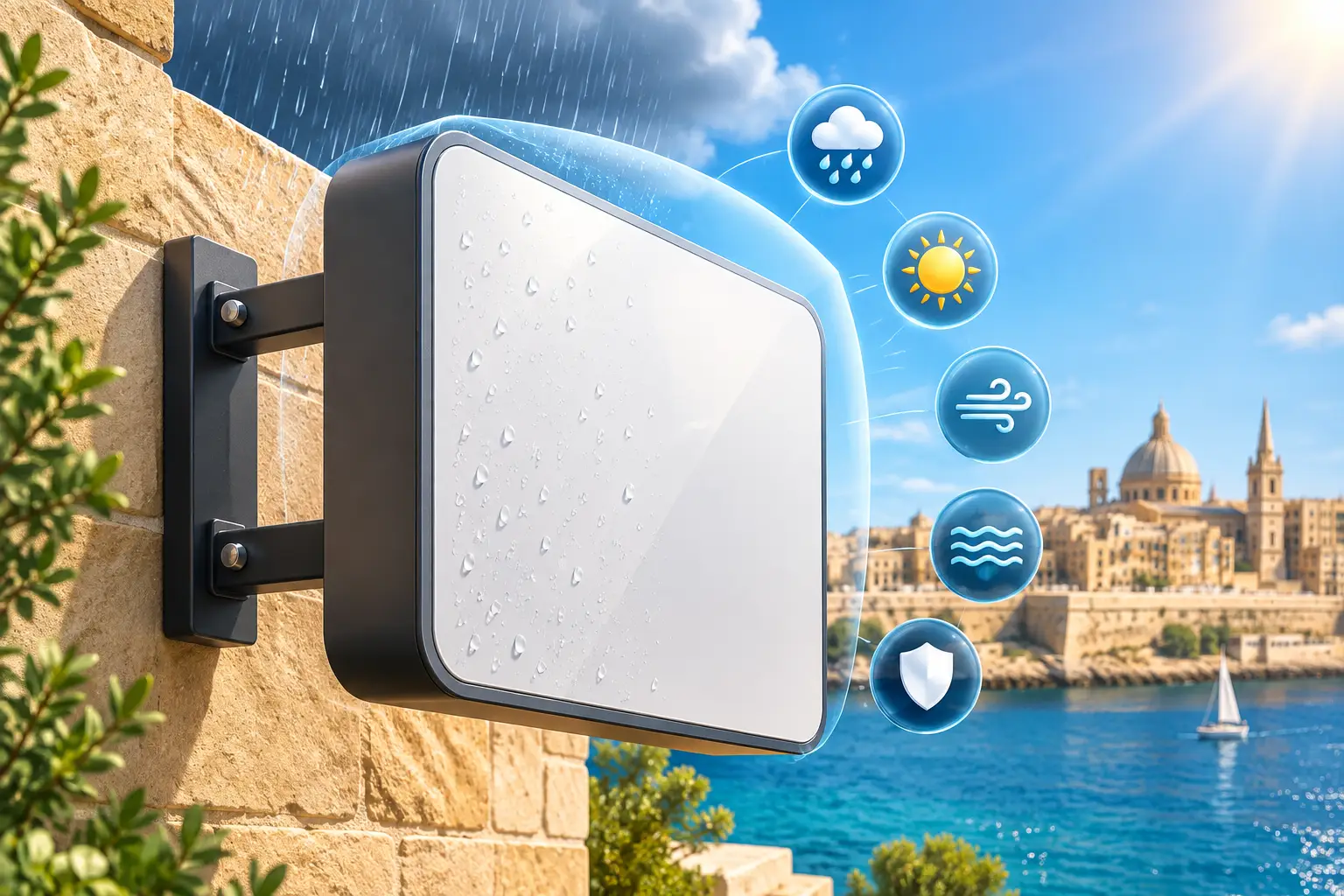
A shopfront sign can look perfect when it leaves the production floor and still fail within a season if the material, print method or fixing system is wrong for its location. In Malta, what makes signage weatherproof is not one coating or one material. It is a specification built around intense UV exposure, heat, wind, rain, airborne salt and the way the sign will be installed.
For marketing, facilities and operations teams, this matters because outdoor signage is usually tied to a trading location, campaign launch or compliance requirement. Reprinting a faded window graphic is inconvenient. Replacing a loose fascia panel, corroded fixing or failed illuminated letter can disrupt a site and create a safety issue. The correct decision is made before production starts.
What makes signage weatherproof?
Weatherproof signage is designed so that its face, graphics, edges, structure and fittings can withstand the conditions it will meet outdoors for an agreed period. A weather-resistant printed vinyl applied to the wrong substrate is not a weatherproof sign. Equally, a high-quality aluminium panel can still deteriorate quickly if exposed edges allow moisture behind the graphic or if incompatible metal fixings cause corrosion.
The required level of protection depends on the application. A short-term event board at a sheltered entrance has different requirements from a permanent shopfront sign facing the sea. A restaurant menu case, a directional sign in a car park and an illuminated sign above a retail unit should each be specified separately, even when they carry the same brand identity.
A practical weatherproof specification considers five connected areas: substrate, print and ink, protective finish, fabrication, and installation. Neglect one and the expected lifespan of the whole sign changes.
Start with the right outdoor substrate
The substrate is the physical base of the sign. It must stay stable as temperatures rise and fall, resist water penetration, and remain suitable for the chosen fixing method.
For rigid outdoor panels, aluminium composite material is a common choice. It has a polyethylene core with aluminium faces, giving a flat, clean surface for printed or cut-vinyl graphics. It is well suited to fascia panels, directional signs and branded site boards where a neat finish and reasonable long-term durability are required.
Powder-coated aluminium is often appropriate for fabricated trays, sign frames and lettering. Aluminium resists rust, but its finish, cut edges and fasteners still need consideration. In coastal areas, salt residue can accelerate visible deterioration where coatings are damaged or water is allowed to sit.
Acrylic is frequently used for built-up letters, illuminated signs and display elements because it provides a precise, premium face. Outdoor acrylic needs adequate thickness and a suitable support structure. Large unsupported sheets can flex in wind and expand in heat, putting stress on fixings and joints.
PVC foam board can be useful for temporary promotional boards and short-term site signage, particularly in sheltered locations. It is not usually the first choice for a long-life sign exposed to strong sun and wind. It can warp over time, especially in larger formats. Matching the substrate to the expected lifespan avoids paying for a material that is either over-specified or likely to fail early.
Outdoor inks need UV resistance
Sunlight is one of the main reasons outdoor graphics lose impact. UV radiation gradually breaks down pigments, causing colours to fade and blacks to take on a washed-out appearance. Bright reds, yellows and certain corporate colours can be particularly sensitive.
Outdoor-rated wide-format inks are designed to provide stronger UV resistance than basic indoor print systems. However, ink durability is only part of the answer. Expected performance depends on orientation, exposure and colour coverage. A sign on a south- or west-facing elevation in Malta receives far more direct sun than one beneath a canopy or in a recessed entrance.
For brand-critical colours, artwork should be prepared with the final production process in mind. A screen colour is not a physical colour standard. Where colour consistency across several locations matters, approved proofs, clear artwork files and repeatable production settings help maintain control from one rollout to the next.
Cut vinyl graphics can be a better option for certain solid colours, lettering and logos. High-performance cast vinyl is more conformable and more durable than lower-cost calendared vinyl, particularly on curved surfaces, vehicle panels and installations exposed to heat. The trade-off is cost, but for long-term external branding it is often the more reliable specification.
Laminates protect the printed surface
A laminate is a clear film applied over a printed vinyl graphic. It adds another layer of protection against UV, abrasion, cleaning and moisture. For exterior graphics, it also helps prevent the print surface from becoming dull or scratched through regular contact and cleaning.
Gloss laminate can make colours appear more vivid, while matt laminate reduces glare. Anti-graffiti and specialist textured films are available for particular environments, though they should be selected for a defined operational need rather than added as a default.
The key point is compatibility. The print film and laminate should be designed to work together. Combining materials from different systems without testing can lead to shrinkage, lifting or reduced performance at the edges. This is especially relevant on vehicle graphics, curved fascias and window applications where movement and heat place the film under greater stress.
Edges, seams and drainage matter more than they appear
Water rarely damages a well-made sign by passing straight through its face. It enters at edges, joints, drilled holes, seams and poorly sealed electrical points. Fabrication details therefore matter as much as the visible graphic.
For panel signs, drilled holes should be positioned and finished to prevent cracking or distortion. For folded trays and fabricated letters, joints must be properly sealed and designed so water does not collect inside. Where a sign includes illumination, cable entries, transformer locations and access panels need suitable weather protection.
Drainage is particularly relevant for projecting signs, illuminated boxes and built-up lettering. A sign enclosure that traps water can suffer internal corrosion, electrical faults or staining down the building façade. A small design decision at the manufacturing stage can prevent repeated maintenance visits later.
Fixings must suit the wall and environment
A weatherproof sign is only as secure as the structure holding it in place. Fixings need to match the wall construction, sign weight, wind loading and access conditions. A lightweight panel fixed to a concrete wall requires a different approach from a projecting sign mounted to stone, blockwork, cladding or a steel frame.
Stainless steel fixings are often specified for exterior work because they offer good corrosion resistance. Grade selection matters near the coast, as does avoiding combinations of metals that can lead to galvanic corrosion. Spacers, brackets and rails should be selected as a system rather than treated as afterthoughts.
Wind is not only a concern for large roadside signs. A poorly secured window graphic, banner or fascia panel can lift at a corner, allowing more air and water behind it. On exposed elevations, installers should assess wind load, mounting points and whether the building surface itself is suitable before production is finalised.
For complex signs, a site survey is the most reliable way to identify measurements, fixing constraints, power availability, access equipment and safe installation routes. It reduces last-minute changes on installation day and helps protect the agreed opening or campaign date.
Weatherproof does not mean maintenance-free
Even the best outdoor sign benefits from planned inspection and cleaning. Salt, dust and traffic film can build up on sign faces and illuminated letters, reducing their appearance long before the materials have reached the end of their service life. Cleaning should use suitable non-abrasive products, particularly on acrylic, laminated graphics and coated metal.
Facilities teams should look for lifting vinyl edges, cracks around drilled holes, loose fixings, failed illumination, water marks and changes in panel flatness. Addressing a small issue early is usually far less disruptive than replacing a complete sign after wind or water damage.
Expected lifespan should also be discussed openly. A temporary event graphic may be fit for purpose for weeks or months. A permanent external sign may need a multi-year material and installation specification. Neither is automatically better - the correct choice is the one that reflects the location, budget, visibility and replacement plan.
Before approving an outdoor sign, define where it will sit, how long it needs to perform, how exposed it is and who will maintain it. That gives your production and installation partner the information needed to specify a sign that continues to represent the business properly after the launch day has passed.