
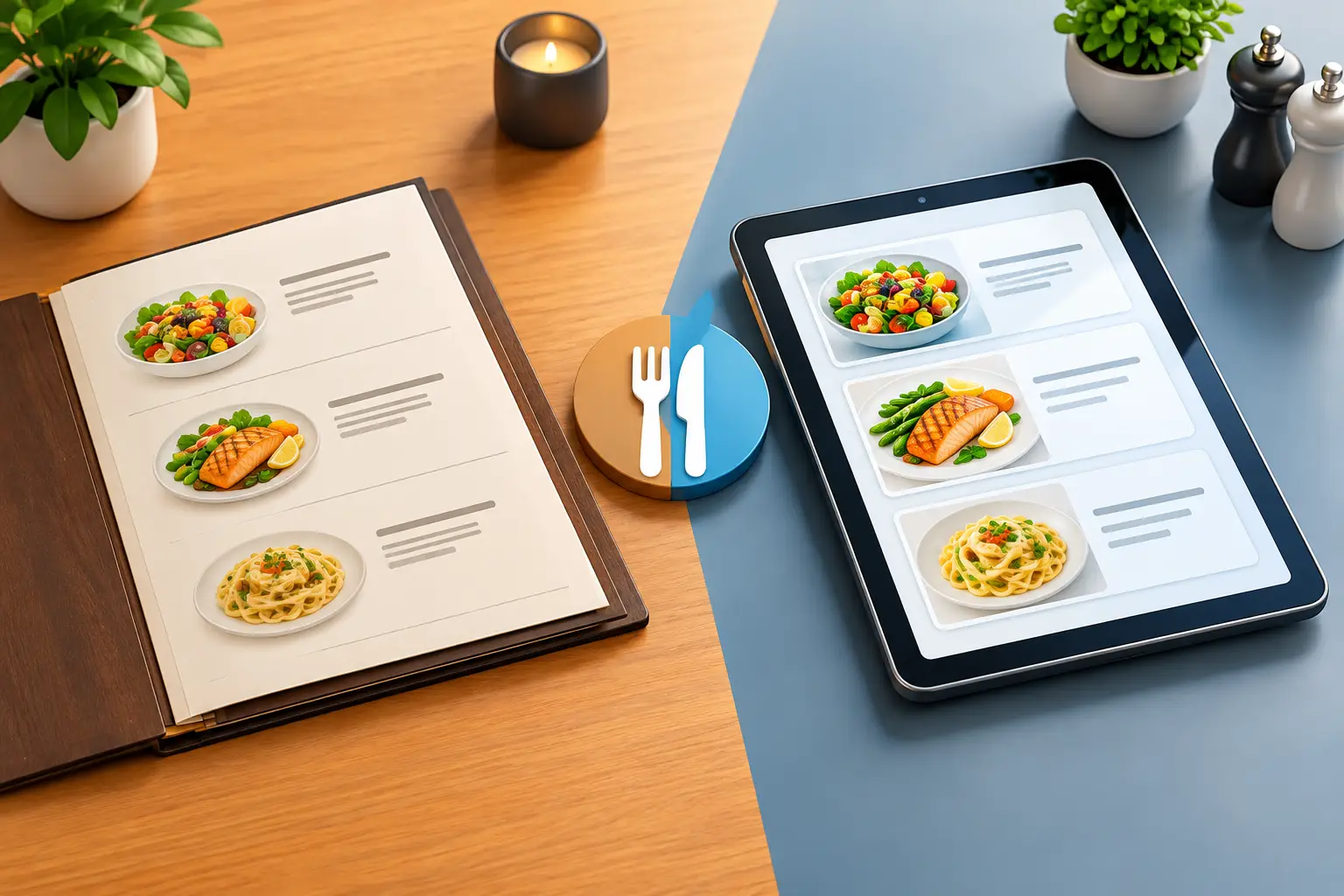
A menu is handled more often than almost any other printed item in a hospitality venue. It passes between staff and guests, meets condensation, food residue and cleaning products, and still needs to present prices, dishes and brand colours accurately. That makes the paper versus synthetic menus decision an operational one, not simply a design preference.
For a café changing its lunch offer every week, paper may be the sensible choice. For a poolside bar, a high-turnover restaurant or a hotel with a seasonal drinks list, synthetic stock can prevent constant replacement. The right option depends on where the menu will be used, how often it changes, how it is cleaned and what standard of presentation the venue needs to maintain.
Paper Versus Synthetic Menus: The Practical Difference
Paper menus are printed on conventional paper or card stocks, with a choice of weights, coatings and finishes. They are economical to produce, easy to fold, score, bind or insert into menu covers, and well suited to short runs. Uncoated stock gives a natural, tactile feel; silk and gloss finishes provide sharper image reproduction and more resistance to marking.
Synthetic menus are made from plastic-based or polyester materials designed to resist water, tearing and repeated handling. They are often described as waterproof, although the practical result depends on the material, ink system and finishing method used. A properly produced synthetic menu can be wiped down regularly without softening at the edges or becoming creased like paper.
The distinction matters most in demanding environments. A laminated paper menu may resist occasional spills, but if water enters an exposed edge or the laminate starts to lift, it will deteriorate. Synthetic material is different: the sheet itself is resistant to moisture and far harder to tear. For venues near the sea, outdoor terraces, beach clubs and pool areas in Malta, that durability has clear value.
When Paper Menus Are the Better Commercial Choice
Paper is often the correct answer where the content changes quickly. Daily specials, chef-led menus, event packages, tasting menus and campaign-led promotions all benefit from affordable reprints. There is little value in investing in a long-life material if the menu will be replaced after a fortnight.
Paper also offers broader freedom for premium presentation. Heavy uncoated cards, textured stocks, coloured boards, foil details and specialist folds can create a considered restaurant or boutique hotel experience. A wine list printed on a substantial uncoated stock can feel more appropriate than a glossy wipe-clean sheet, particularly where the service style is formal and the list changes seasonally rather than daily.
For multi-page menus held in covers, replaceable paper inserts give operations teams flexibility. A price revision or unavailable item does not require an entirely new menu. Individual leaves can be updated, delivered and inserted by staff, helping a venue manage costs without compromising consistency across tables.
Paper has limits, however. It absorbs moisture, picks up stains and can fray at fold lines. Even a well-laminated paper menu eventually shows wear under heavy service. It also needs careful specification: a thin stock may feel inexpensive and curl easily, while an overly glossy finish can create glare under restaurant lighting.
Where Synthetic Menus Earn Their Cost
Synthetic menus are built for repetition. They are particularly effective for drinks menus, outdoor food menus, children’s menus, table-service QR instruction cards, spa price lists and any item that is wiped between customers. In high-volume locations, fewer replacements can offset the higher unit price.
They are also useful where menus spend time outside. Wind, humidity, condensation and frequent cleaning are difficult conditions for paper. A synthetic menu remains flat and readable longer, helping staff avoid presenting a worn or curling item at the table.
Hygiene procedures are another consideration. Many venues now clean menus as part of standard table turnaround. Synthetic stock supports this routine, provided the chosen cleaning product is compatible with the print and finish. It is sensible to test any disinfectant or sanitiser before committing to a large run. Strong chemicals, abrasive cloths and repeated rubbing can affect certain printed surfaces over time.
Synthetic material is not automatically the premium choice in every setting. Its surface can feel less natural than heavyweight paper, and some stocks have a noticeable sheen. For a fine-dining restaurant, that may work against the intended atmosphere. Material selection should support the customer experience rather than follow a durability specification by default.
Consider the menu’s replacement cycle
The most useful question is not, “Which material lasts longer?” It is, “How long will this version of the menu remain current?” A permanent cocktail menu used for six to twelve months is a strong synthetic candidate. A food menu subject to frequent supplier changes, seasonal ingredients or price movements may be better produced on paper.
A mixed approach is often the most efficient solution. A venue might use synthetic drinks menus and children’s menus, paper inserts for the main food offer, and disposable printed sheets for daily specials. This keeps the durable elements in circulation while allowing fast, controlled updates where they are needed.
Factor in the full cost, not only the unit price
Paper generally costs less per copy, especially on short runs. Synthetic stock costs more to buy and print, but may require fewer replacements over its working life. The real comparison includes how many menus a venue holds, how often they are damaged, staff time spent removing tired copies, and the reputational cost of a guest receiving a stained or creased menu.
For a restaurant operating seven days a week, a menu that lasts several months may provide better value even at a higher initial cost. For a pop-up, wedding venue or short campaign, paper remains the more commercially sensible option.
Print Finish, Readability and Brand Consistency
Material is only one part of the specification. Menu readability depends on typography, contrast, fold format and finishing. Small type, low-contrast colours and overcrowded layouts are difficult to use regardless of whether the menu is paper or synthetic. This becomes more noticeable in dim bars, outdoor evening service and venues where guests are reading without their glasses.
Matt or silk finishes usually reduce glare and are easier to read under direct lighting. Gloss can make food photography and bold colour blocks look vivid, but it may reflect pendant lights or sunlight. For synthetic menus, a matt finish is frequently the practical choice for a premium, readable result.
Brand consistency also requires control across every format. If the main menu, wine list, table talker, takeaway leaflet and exterior board use different colours or type treatments, the venue can look improvised. A clear artwork setup and approved print specification make repeat orders faster and reduce variation between batches.
Before production, confirm the final size, number of panels, fold direction, quantity, finishing, and whether a menu needs holes, corners, binding or inserts. A menu cover may dictate exact dimensions. Rounded corners may be worthwhile for frequently handled synthetic menus, while scored folds are essential for heavier paper stocks to prevent cracking.
Choosing the Right Menu Material for Your Venue
Choose paper when the menu changes often, the presentation calls for a tactile premium stock, or replaceable inserts will simplify ongoing updates. Choose synthetic when menus are exposed to water, outdoor conditions, intensive handling or regular cleaning. If both needs apply, separate the stable content from the changeable content rather than forcing one material to do every job.
For operational teams, the best menu is the one that arrives on time, remains presentable through service and can be replaced without disruption when prices or dishes change. Printhub Malta can help assess artwork, stock, finishing and quantities before production, so the specification suits the actual conditions on site. A practical sample check before a full run is often the simplest way to confirm that the menu feels right in the hands of your guests.