
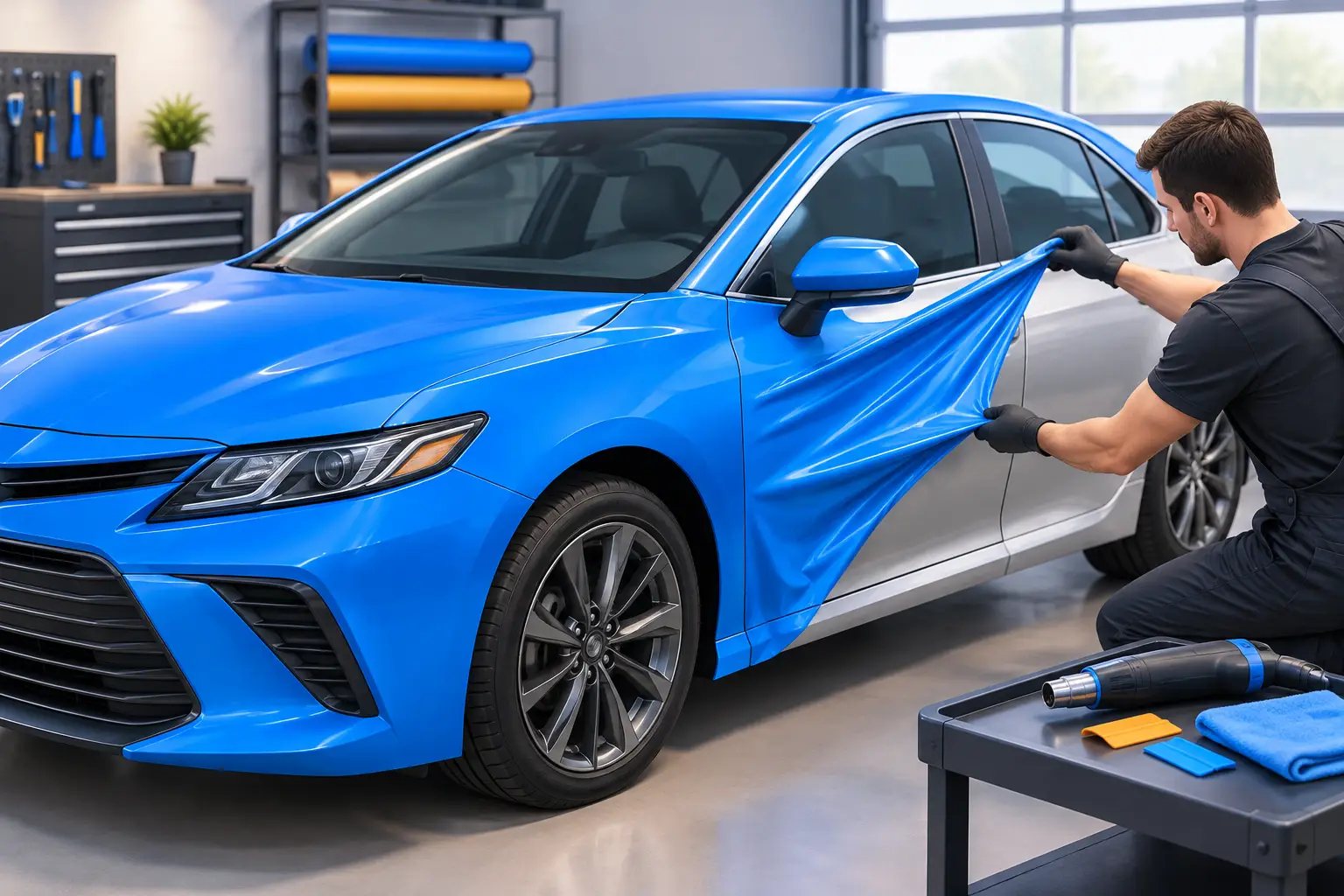
A vehicle wrap is not necessarily a permanent branding decision. Can vehicle wraps be removed? In most cases, yes - provided the vehicle was properly prepared, the correct film was used, and removal is carried out with the right heat, technique and timing. For fleet operators, marketing teams and businesses planning a rebrand, that removability is one of the practical advantages of vinyl graphics.
The qualification matters. A wrap can be removed cleanly, but no installer should promise identical results on every vehicle without checking its age, paint condition, previous repairs and the type of graphics applied. The vehicle’s history determines the risk as much as the wrap itself.
Can Vehicle Wraps Be Removed From Any Vehicle?
Most professionally installed vehicle wraps can be removed from painted panels, glass and other suitable vehicle surfaces. Full wraps, partial wraps, decals and promotional graphics are all designed to be removable within their expected service life. Quality cast vinyl films are generally the preferred material for complex vehicle contours and longer-term applications because they conform well and tend to remove more predictably than lower-grade alternatives.
However, removal is not simply a matter of pulling the vinyl away. Adhesive performance changes over time. Strong sun exposure, heat, poor surface preparation and years beyond the film’s intended lifespan can make removal slower and leave adhesive residue behind. Malta’s climate adds a relevant consideration: vehicles exposed daily to intense UV, coastal air and high surface temperatures will place more demand on both the film and adhesive.
A wrap that is removed after three to five years, depending on the material and exposure, is usually a more straightforward project than one left in place for a decade. This is especially relevant for company cars, delivery vans and service fleets that spend long periods parked outdoors.
What Happens to the Paint Under a Wrap?
When the original paint is factory-applied, sound and fully cured, a correctly installed wrap will often protect it from minor abrasion, UV fading and everyday road grime. On removal, the covered paint may look noticeably fresher than adjacent unwrapped panels. That is not damage caused by the wrap. It is simply the difference between protected paint and paint exposed to the elements.
The greater risk is pre-existing paint weakness. Resprayed panels, poor-quality repairs, lacquer that is already lifting, rust around panel edges, stone-chip damage and ageing paint can all create problems. Vinyl adhesive may pull away unstable paint or expose defects that were already present beneath the surface.
For this reason, a vehicle inspection should happen before installation and again before removal. Clear photographs of existing chips, scratches, dents and repaired areas provide a useful record for fleet managers, leasing teams and suppliers. It is a small administrative step that avoids uncertainty later.
New paint requires particular care. It must be fully cured before a wrap is installed, with the required curing period confirmed by the body shop or paint manufacturer. Applying film too soon can affect adhesion and increase the likelihood of issues when the graphics are eventually removed.
How Professional Vehicle Wrap Removal Works
Professional removal starts with an assessment, not a fixed assumption about hours or cost. The installer will identify the vinyl type, estimate its age, inspect exposed panel edges and note any damaged paint or areas where the film has heavily weathered.
The film is then warmed in controlled sections. Heat softens the adhesive and makes the vinyl more flexible, allowing it to be lifted at a low, steady angle. The aim is to remove the film in manageable pieces without tearing it into small fragments or stressing the paintwork underneath. Too much heat can damage paint or distort plastic trim; too little can make the adhesive resist release. This is why a heat gun in inexperienced hands is not a shortcut.
Once the vinyl is removed, any remaining adhesive is treated with a suitable surface-safe remover. The vehicle is then cleaned and checked panel by panel. Door shuts, handles, mirrors, bumpers, panel gaps and recessed areas require extra attention, particularly where a wrap has been fitted around complex contours.
For a full fleet rebrand, removal should be planned as a production workflow. Vehicles may need to arrive clean, be taken out of service in stages and have replacement graphics installed immediately after removal. Coordinating removal, printing, fitting and handover through one accountable production partner reduces downtime and avoids a vehicle leaving site half-finished.
The Factors That Affect Time and Cost
There is no reliable flat rate for all vehicle wrap removals. A small set of door graphics on a recently branded car may be completed relatively quickly. A sun-baked full wrap on a large van, particularly one with damaged film across roof sections and bumpers, may require substantially more labour.
The main variables are the size of the vehicle, coverage area, age and condition of the vinyl, material quality, amount of adhesive residue, access around trims and whether replacement graphics are being fitted at the same appointment. A vehicle that has been stored indoors will generally be less demanding than one exposed year-round to heat and UV.
Operational requirements also affect the programme. A hospitality business may need branded vehicles available before a venue opening. An events supplier may require a fleet refreshed before a campaign date. In these cases, the most effective approach is to agree the installation sequence early, reserve fitting capacity and allow contingency for cleaning, surface repairs or unexpected adhesive residue.
When Removal May Need Extra Care
Some situations should be flagged before any work begins. If a panel has been repainted, the condition of the repair should be checked carefully. If the vehicle has corrosion, bubbling paint or flaking lacquer, wrap removal can reveal the true extent of the underlying issue. The correct solution may involve bodywork repair before new branding is installed.
Chrome-effect films, heavily textured materials, printed films with additional laminates and graphics installed over awkward trims can also take longer to remove. None of these make removal impossible, but they affect the labour estimate and should be part of the initial survey.
Lease vehicles deserve the same level of attention. Before returning a car or van, it is sensible to schedule removal early enough to deal with residue, panel cleaning or any unrelated condition issues identified during the process. Leaving it until the final days of a lease creates avoidable pressure and limits options if rectification work is needed.
Planning a Rebrand Without Losing Vehicle Availability
For most businesses, the question is not only whether a wrap can be removed. It is whether the vehicle can return to work quickly, cleanly and with the new brand correctly applied. That calls for a documented plan covering vehicle list, graphic locations, artwork approval, installation order, site access and handover dates.
Where a fleet includes different makes, models or body styles, templates and vehicle measurements should be checked before production. A design that works on one van may need adjustment for another wheelbase, rear-door configuration or panel line. Consistency does not mean forcing identical artwork onto unsuitable surfaces. It means applying the same brand system accurately across each vehicle.
For high-visibility fleets, Printhub Malta can coordinate the practical stages from artwork preparation and print production to removal, installation and on-site scheduling. This is particularly useful where vehicles cannot all be taken off the road at once and brand transition dates are fixed.
Questions Businesses Should Ask Before Booking Removal
Ask what film is currently on the vehicle, when it was installed and whether the paint has been repaired since. Confirm whether the quoted work includes adhesive removal, final cleaning and disposal of the old graphics. If a new wrap is planned, establish whether the vehicle will be rewrapped on the same day and what downtime is expected.
It is also worth asking how pre-existing damage will be recorded. A clear inspection process protects both the vehicle owner and the installer, particularly for leased fleets or shared company vehicles. If the job is urgent, confirm the production and fitting schedule in writing rather than relying on an assumed turnaround.
A removable wrap gives businesses room to change campaigns, update a fleet after an acquisition or return leased vehicles in the correct condition. The best result comes from treating removal as part of the original branding plan, not as an afterthought when the next deadline is already approaching.